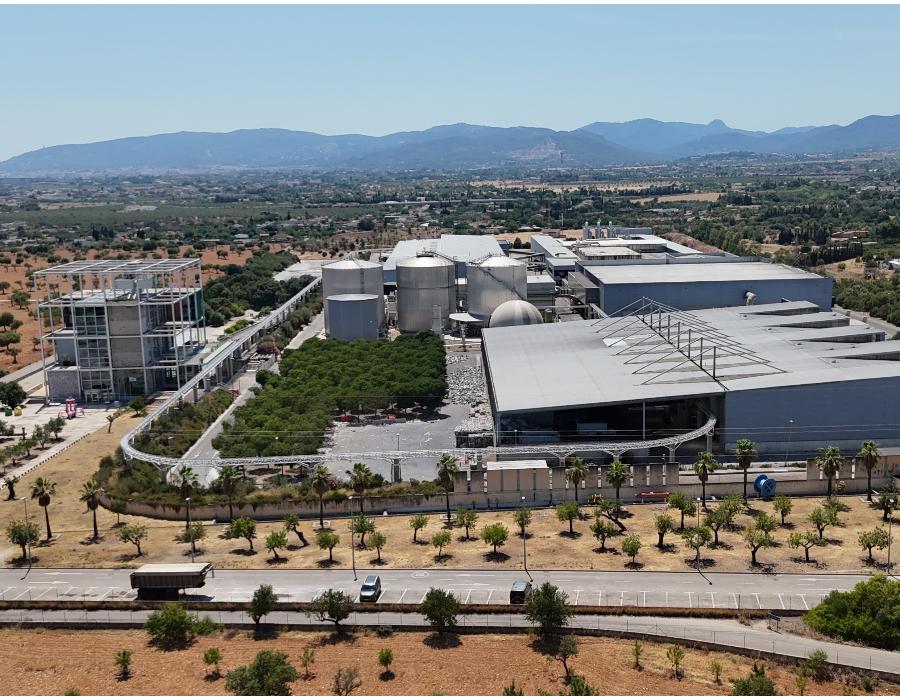
The company points out that its profitability is at the usual levels for the sector, defends the legality of the pricing system in place since 1992, and clarifies that the Consell de Mallorca subsidizes the municipalities, not TIRME
07/10/26 - NewsTIRME has analyzed the report from the General Comptroller’s Office of the Council of Mallorca regarding the management of the concession for the island-wide public urban waste treatment service. The company maintains that the document presents assessments that do not reflect the entity's economic reality or the technical operation of the tariff mechanisms. Furthermore, TIRME wishes to point out that it gained access to the report's contents through the media.
Profitability within sector margins.
Regarding the profit levels cited in the document, TIRME wishes to clarify that the calculation does not provide an accurate picture of the company's financial standing, as it relates profits solely to equity without considering the substantial volume of external financing required to carry out the public service investments—valued at over €620 million.
When considering the total economic resources mobilized—both equity and external financing—TIRME’s average profitability over the last six fiscal years stands at 6.08%. This figure, which also appears in the General Comptroller’s report, places TIRME tenth among the 52 most representative companies in the Spanish sector.
Moreover, if that same profitability were analyzed from the inception of the concession, the result would be 2.95%—a percentage considered moderate even by standard market ranges for long-term public concession contracts.
Operation of the tariff review system
Regarding the observations in the report concerning the annual tariff adjustment system, it is important to note that the current formula is based on the terms of the original contract and on methodologies formally approved by the Consell de Mallorca. The procedure combines initial estimates with subsequent settlements based on actual data audited by the institution's own technical staff since the concession began. This system limits tariff fluctuations caused by external factors and allows for subsequent adjustments based on variables such as tonnage processed, the CPI, diesel costs, and electricity prices.
Regarding the CPI-based adjustment of amortization costs, TIRME wishes to clarify that this mechanism was explicitly provided for in the initial 1992 concession contract to preserve the investment's value against the long-term impact of inflation—a standard practice in this type of concession. It is important to highlight that this criterion has been consistently upheld in all subsequent contract amendments approved by the Plenary Session of the Consell de Mallorca in 2001, 2007, 2013, 2018, and 2023, and is supported by four opinions from the Consell Consultiu (97/2000, 51/2007, 115/2018, and 106/2023).
The Council of Mallorca subsidizes municipalities, not TIRME.
The Council of Mallorca set a goal to reduce the general urban waste fee by 10%. It also decided that the treatment of separately collected organic waste would be free of charge for service users. To meet this objective and comply with the financial clauses of the concession contract, the Council is covering—on the one hand—part of the cost of the general fee and—on the other—the entire cost of the organic waste treatment fee.
The case of the organic waste fraction is the most illustrative example. According to reports issued by Council of Mallorca technical staff, treating organic waste costs €14.5 million annually. To ensure municipalities do not have to bear this cost, the Council of Mallorca pays that €14.5 million to TIRME. This mechanism was explained by the Council's General Comptroller's Office in a report dated February 2, 2026, responding to the Audit Office's report. The General Comptroller's Office states verbatim: "Although we have referred to the funds provided to the company TIRME SA as 'subsidies'... with the aim of lowering the corresponding fees, this form of remuneration for the concessionaire stems from the concession contracts themselves. Therefore, they are more accurately described as contributions from the Administration to finance the contract itself—alongside the fees—meaning that contract regulations apply rather than subsidy regulations..." Ultimately, if the Council of Mallorca did not make these contributions, TIRME would receive the same amount of revenue by billing the municipalities for the full cost of the service through the corresponding fees—which would, obviously, be higher for citizens.
Continuity of the management model
TIRME believes that the current concession framework has enabled Mallorca to achieve the highest standards of waste management and environmental efficiency. TIRME reaffirms its willingness to maintain institutional collaboration and thus continue advancing toward the sustainability and circular economy goals set for the Balearic Islands.



.png)